Due
to various factors including the oddball effect, our perception
of time is sometimes different than clock-based time; for example,
some viewers say one of these 12-second video clips seems shorter
than the others.
CLIP
> 12 seconds from 01:00 to 01:12
CLIP
> 12 seconds from 11:12 to 11:24
CLIP
> 12 seconds from 00:22 to 00:34
CLIP
> 12 seconds from 01:08 to 01:20
CLIP
> 12 seconds from 04:51 to 05:03
Unit 102
The
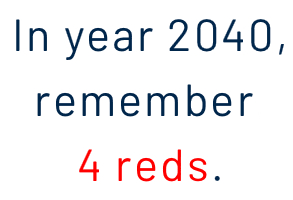
2040 Exercise at the bottom of this page will be easy for some,
difficult for others, and impossible for the man in this video.
CLIP
> 15 seconds from 00:08 to 00:23
Unit 103
R. v. Morris
(1994): A driver charged with speeding was in the left lane when
a speeding vehicle approached from behind. She used the "Defense
of Necessity" to justify why she exceeded the speed limit to
pass the vehicles on her right so she could change lanes and get
out of the way of the vehicle behind her.
To use the
"Defense of Necessity", you must prove three things:
1) There
was an imminent peril or danger.
2) There
was no reasonable legal alternative to the illegal course of action
you took.
3) The harm
(if any) you inflicted was proportional to the harm you avoided.
Unit 104
R. v. Sangha
(2020): The driver was seen holding a cell phone in his hand on
his thigh after picking it up from the floor after a sudden stop.
The driver said he had to pick it up due to safety concerns; however,
the "Defence of Necessity" does not apply in this case.
Unit 105
R.
v. Skull (2013): Judge ruled that the crown doesn't need to prove
that a hand-held cell phone is capable of transmitting or receiving.
Unit 106
Grzelak
v. BC (2019): The driver had earbuds in his ears and a dead phone
in the dashboard's cubbyhole; therefore, the driver was holding
part of an electronic device (the earbuds) in a position (in his
ears) in which it could be used and it's irrelevant that the battery
was dead.
Unit 107
A fundamental
legal principle in most of the world is expressed as follows in
Section 19 of the Criminal Code of Canada: "Ignorance
of the law by a person who commits an offence is not an excuse for
committing that offence."